define daemon --plain-english
Daemon
TLDR:Not demon.
Not demon. Daemon. Though the job description isn't far off: always there, always watching, doing its thing whether you see it or not.
A daemon is a process that runs in the background indefinitely. It doesn't have a window. It doesn't need your attention. It starts when the system starts (or when it's told to) and it just keeps going, quietly doing one specific thing, until something tells it to stop.
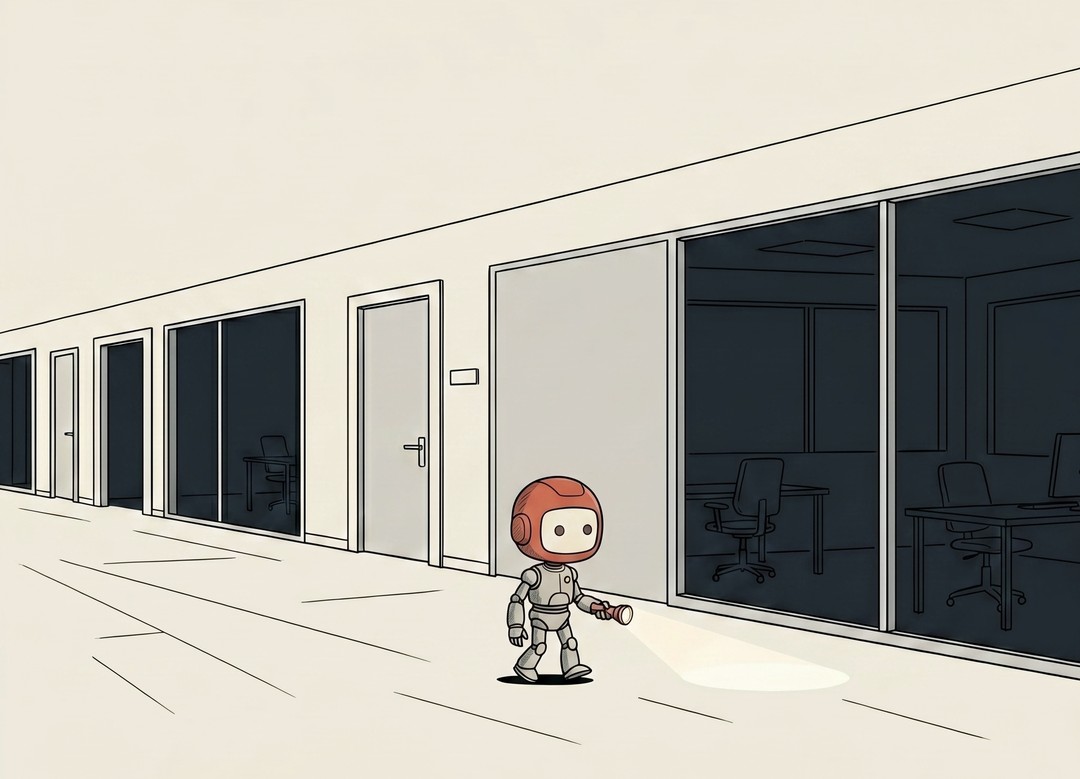
The closest real-world equivalent is overnight security. The building doesn't stop being watched when everyone goes home. Someone's there all night (not participating in meetings, not answering phones, not part of the main work) but present, watching, ready to act the moment something triggers them. That's the daemon.
The terms you've already heard for daemons without knowing it:
On a Mac or Linux machine, background processes that end in "d" are almost always daemons. sshd handles remote logins. crond runs scheduled tasks. httpd serves web pages. The "d" literally stands for daemon.
The services that restart automatically when they crash? Daemon. The thing that checks for software updates overnight? Daemon. The thing that watches for new emails without you having to click anything? Daemon.
Why this matters for agent-driven businesses.
A lot of what "set it and forget it" actually means is: you wrote one good daemon. It sits there watching for a condition, acts when the condition is met, goes quiet again, and repeats, forever.
When I have an agent watching inboxes for a specific kind of customer message, the thing doing the watching is effectively a daemon. It isn't running a task on demand. It's alive, standing watch, ready.
The single thing worth knowing about daemons and AI agents: if your automation suddenly stops working and nothing else changed, check whether the daemon is still running. Background processes can be killed by OS updates, memory pressure, timeouts, or crashes. The daemon doesn't complain when it stops. It just goes quiet. You only notice when the thing it was doing stops happening.
Set it and forget it works until you actually forget it. Daemons don't ask for attention, same as a guard who doesn't come find you every hour just to say the building's still standing. That's the feature and the risk at the same time.