define fine-tuning --plain-english
Fine-tuning
TLDR:RAG is the open-book exam, where the AI looks things up before it answers.
RAG is the open-book exam, where the AI looks things up before it answers. There's a second way to make an AI know your world, and it's the opposite move. Instead of handing it a book to flip through, you change what's already in its head.
Hold the two side by side, because "how do I make AI know my stuff" almost always comes down to this fork.
A new hire is the cleanest way to see it.
- RAG is handing them a binder and saying "the answer's in here, look it up." Fast, cheap, the binder updates anytime, and they can only ever be as good as the binder open in front of them.
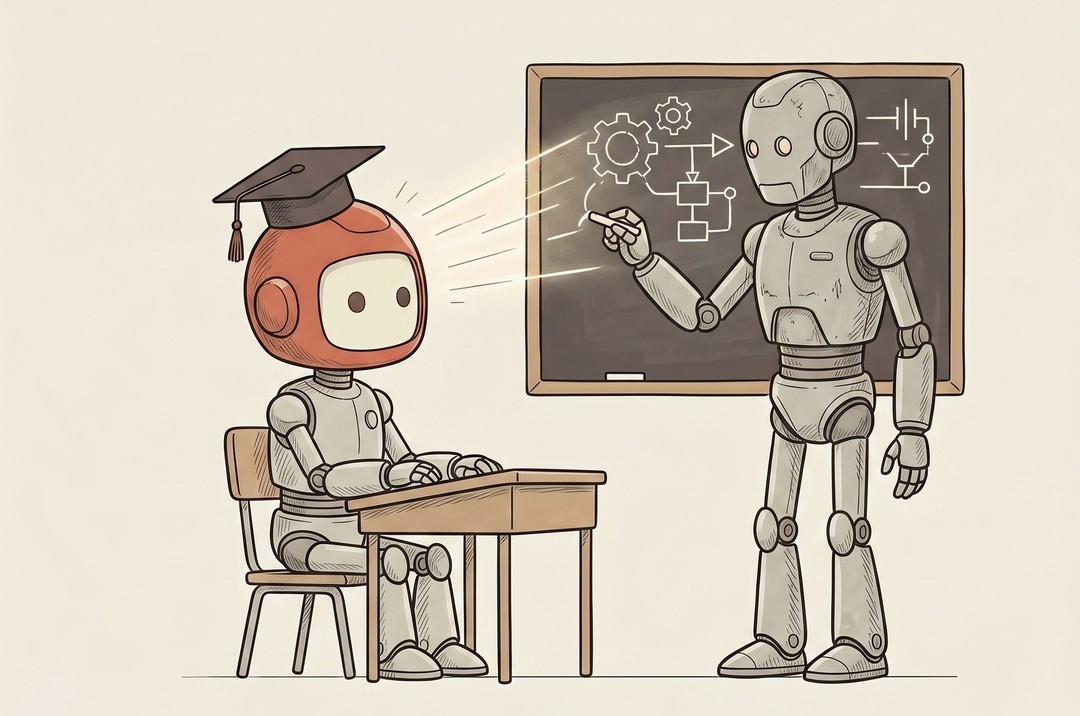
- Fine-tuning is sending them to a six-week course. Afterward they don't reach for the binder on that stuff. It's in their bones. They write in your house style without being reminded. But the course cost real time and money, and the day your process changes, you're sending them back to school.
So fine-tuning is taking a base model and continuing to train it on a pile of your examples, until the pattern gets baked in permanently. No page to flip to. It just does it that way now.
What it's actually good at, and what it isn't. Fine-tuning is usually bad at facts. Facts change, like prices, inventory, last week's numbers, and retraining the model every time a price updates is insane. RAG owns facts. Where fine-tuning shines is shape and style: making the model reliably sound like your brand, format every answer the exact way you need, or nail one narrow repetitive task. You're not teaching it new facts so much as new habits.
The honest tradeoffs, said plainly:
Cost and effort. You need a real pile of good examples and an actual training run. Far more lift than just pointing RAG at a folder.
It freezes in time. Bake in today's knowledge and it's frozen at today. The world keeps moving. Your fine-tune doesn't, until you do it all again.
You can't un-bake it. A wrong fact baked into the training resurfaces later as confident nonsense, the same hallucination problem in a more permanent form, and you can't just edit a page to fix it. You retrain.
The real-world answer is almost always "both." Fine-tune the style so it sounds like you, and RAG the facts so it stays current. Most convincing "AI that knows my business" is that combo, not a religious choice between the two.
So when someone asks "should we fine-tune or use RAG?", translate it to: do we need it to learn something permanently, or just look something up? If the thing keeps changing, start with RAG. If it's the same task in the same shape a thousand times, fine-tuning starts earning its cost.
RAG hands it the open book. Fine-tuning sends it to school. Facts change, so look those up. Style and habits stick, so bake those in.