define reasoning --plain-english
Reasoning
TLDR:For a while, AI answered like a kid blurting out the first thing that popped into their head.
For a while, AI answered like a kid blurting out the first thing that popped into their head. Fast, confident, and wrong a lot when the question was hard. Reasoning is what changed that.
A reasoning model is one that works through a problem step by step, in writing, before it commits to a final answer. Instead of jumping straight to "42," it quietly thinks: okay, the question is asking this, which means I need to do that first, then check this. Then it answers. You often don't see those steps. They happen behind the curtain. But they're the difference between a snap guess and a worked-out answer.
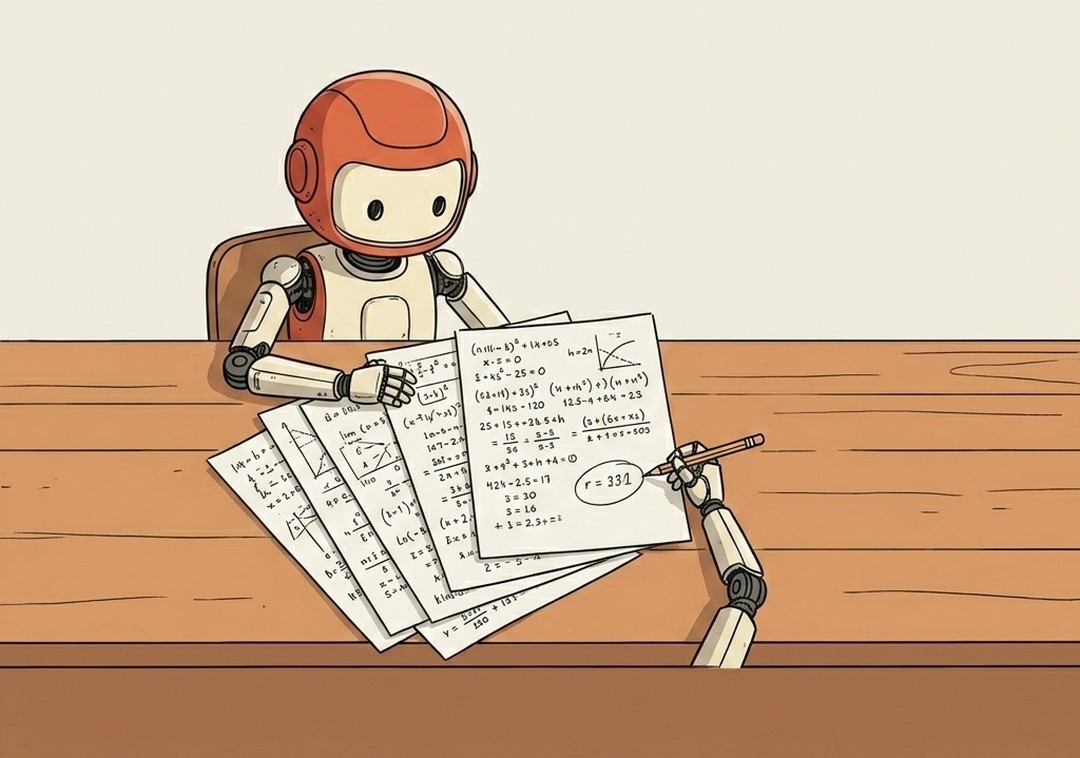
Think about how you'd handle "what's 17 times 23" versus "what's 2 plus 2." The easy one you just know. The hard one you need a second, maybe scratch paper. Reasoning is the model reaching for scratch paper. It's most useful exactly where blurting fails: math, logic, multi-step plans, code, anything with traps where the obvious first answer is the wrong one.
This ties back to inference, the model running to produce an answer, laying down tokens one at a time. Reasoning is the model spending more of those tokens on itself first, thinking out loud before it talks to you. That's why reasoning answers cost more and take longer. You're paying for the scratch work, not just the final line. (It's also why you sometimes see a "thinking…" pause before the real answer starts. That's the scratch paper being filled.)
So when you hear a model is "good at reasoning," or see a setting like reasoning effort turned to low or high, that's the dial on how much scratch work it does before answering. Low effort for quick, easy stuff where thinking is wasted. High effort for the gnarly problem where you want it to slow down and check itself. More thinking isn't always better. It's better for hard things, and just slower and pricier for easy ones.
One honest caveat: the steps a model shows aren't always the real reason it landed where it did. It can reason beautifully on the page and still get the answer wrong, the same confident-and-wrong hallucination problem, now with more homework attached. Reasoning makes hard answers a lot more reliable. It doesn't make them guaranteed.
Reasoning is the model reaching for scratch paper before it answers. It costs more tokens and more time, and it's worth it exactly when the question is hard enough that the first guess would be wrong.