define refactoring --plain-english
Refactoring
TLDR:Tidying the code without changing what it does.
You know that drawer in the kitchen. Takeout menus, three dead batteries, a charger for a phone you don't own anymore, and somewhere in there, the only working scissors in the house. The drawer still works. You can still find the scissors. It just takes ninety seconds and a little prayer every time.
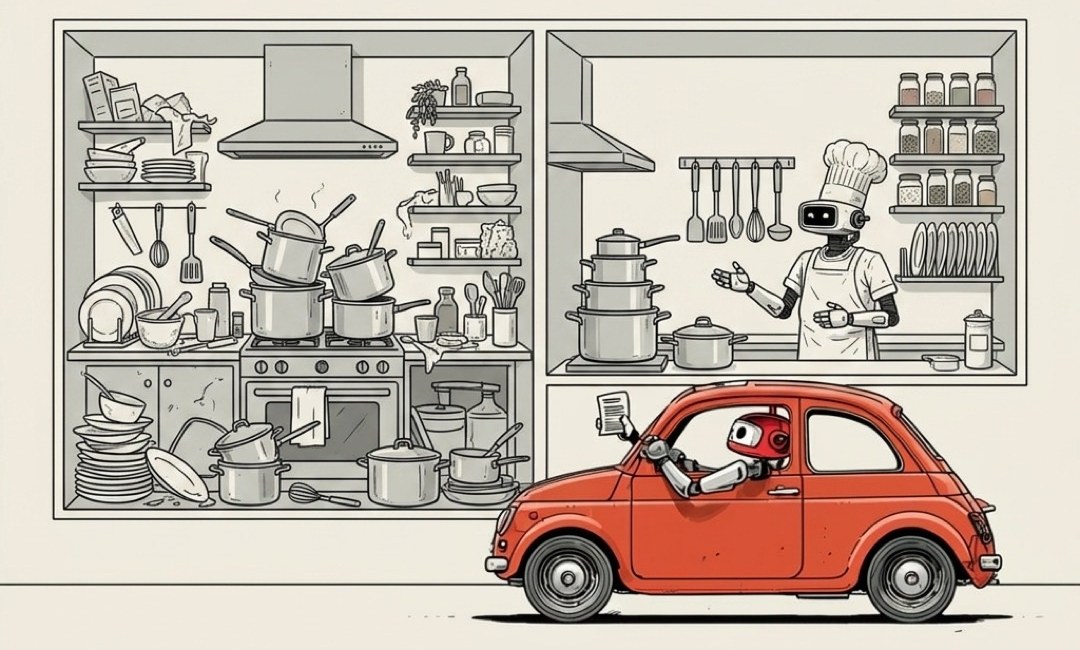
Refactoring is the afternoon you finally dump it out and sort it.
Nothing about the job changes. You didn't add a drawer or throw the good stuff out. You just made it so next time you reach in, you grab what you want in two seconds instead of digging. Same idea with code: refactoring changes how the code is organized on the inside, never what it does on the outside. Same buttons, same behavior, same result for whoever's using it. The only thing that got better is how easy it is to work with next time.
So why bother if nothing visibly changes? Because messy code charges you rent, quietly, forever. The first version of anything is rarely clean. You bolt things on as you figure it out, then bolt more on. Six months later a "tiny" change touches eleven different spots and you're scared to move any of them. That's the drawer. The thing works. You just dread reaching into it.
Here's the part nobody tells you: when you build with AI, this is now your job, not just a developer's. You describe what you want, it writes it, you move on. Multiply that over a week and you've got a giant pile that runs but is held together with tape. The AI optimized for "make it work," not "make it pleasant to live in." So every so often you stop and say:
This works. Before we add anything else, clean up the code without
changing what it does. Same behavior, just tidier and easier to follow.
That one sentence is you asking for a refactor. And it pays off right away, because a tidy codebase is one the AI itself navigates better. A junk drawer confuses it the same way it confuses you.
Two things worth holding onto. Do it small and often, not big and never. The pros don't block off a "refactoring week," they tidy in little passes so the mess never piles up. And know that this isn't adding features or fixing bugs. It's the third thing people forget exists: making what's already there easier to change. Skip it forever and every future feature costs more than it should.
Clean the drawer while it's still just messy.