define build-compile --plain-english
Build / Compile
TLDR:"The build failed." For the longest time I didn't even know "build" was a step.
"The build failed." For the longest time I didn't even know "build" was a step. I figured you wrote code and it just ran.
It doesn't. The code you (or your AI) write is meant for humans to read. The computer doesn't actually run that version. There's a step in between that turns your readable code into the packaged, optimized form the machine truly executes. That step is the build. When it's specifically translating your code down into the computer's native language, people call it compiling. Same family, slightly fussier word.
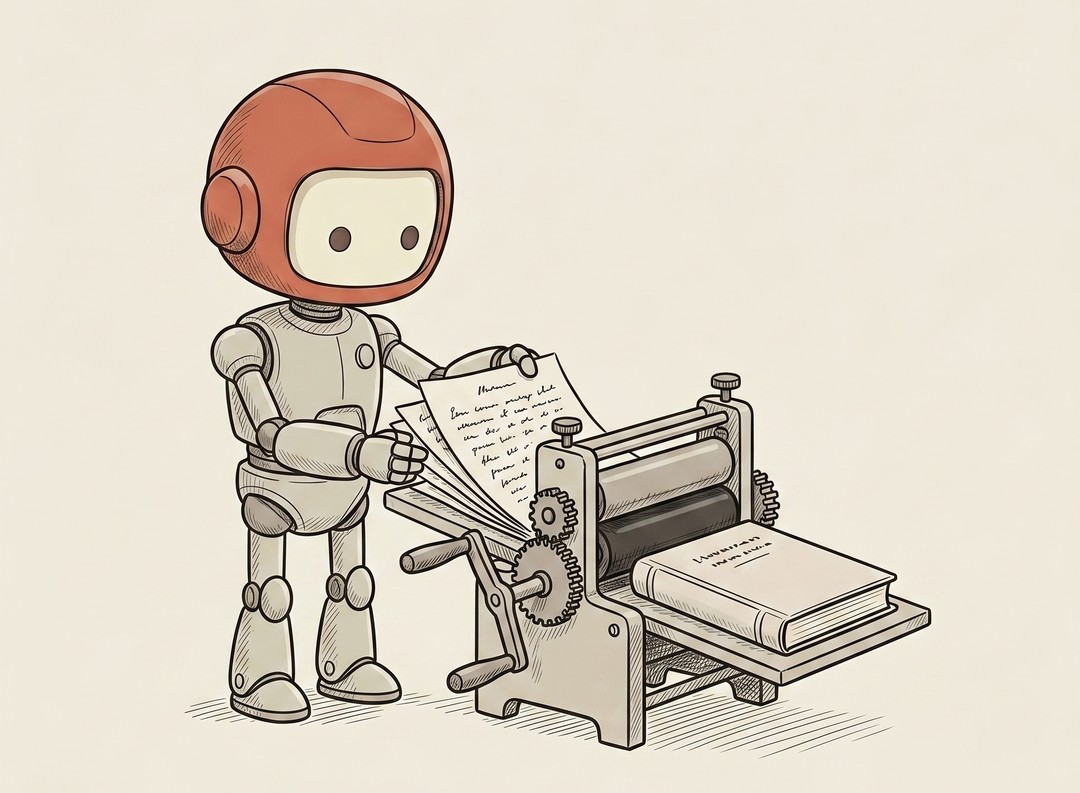
Manuscript to printed book. You write a manuscript. Nobody hands a bookstore customer your marked-up stack of draft pages. It goes to the printer, who sets the type, binds it, and produces the actual book people can buy. The build is that print run. Your code is the manuscript. The build produces the bound book the computer reads.
A surprising amount happens in that single pass:
- It translates your code into the form the machine runs.
- It bundles in all the borrowed pieces your project leans on (the dependencies, your store-bought parts).
- It checks the labels line up (type errors surface right here).
- It squeezes everything down so it loads fast for whoever opens it.
So "the build failed" means the print run jammed before it could produce a book. Something didn't add up: a mismatched type, a missing piece, a typo the translator couldn't parse. Nothing shipped. The failure happened in the print shop, in private, not in front of a single reader. A failed build is the cheapest possible place to catch a problem.
Look at where it sits in the deploy rhythm. You build, it comes out clean, then you deploy and the theater doors open. Build is the checkpoint before the audience arrives. That's why "the build is green" is the little exhale before shipping. The book printed clean, now it can go on the shelf.
Why a non-coder should care at all: when your agent says "let me run the build" and a minute later "build failed," it is not stuck and you are not doomed. It's standing at the most ordinary checkpoint there is. The error it prints is a gift, not a verdict, so paste the whole stack trace back to it. And when a developer tells you "the build takes twenty minutes," now you know why nobody's thrilled about it. Printing a whole book isn't instant.
Code is the manuscript. The build is the print run. "Build failed" means it jammed in the shop, which is exactly where you want it to jam.