define pull-request --plain-english
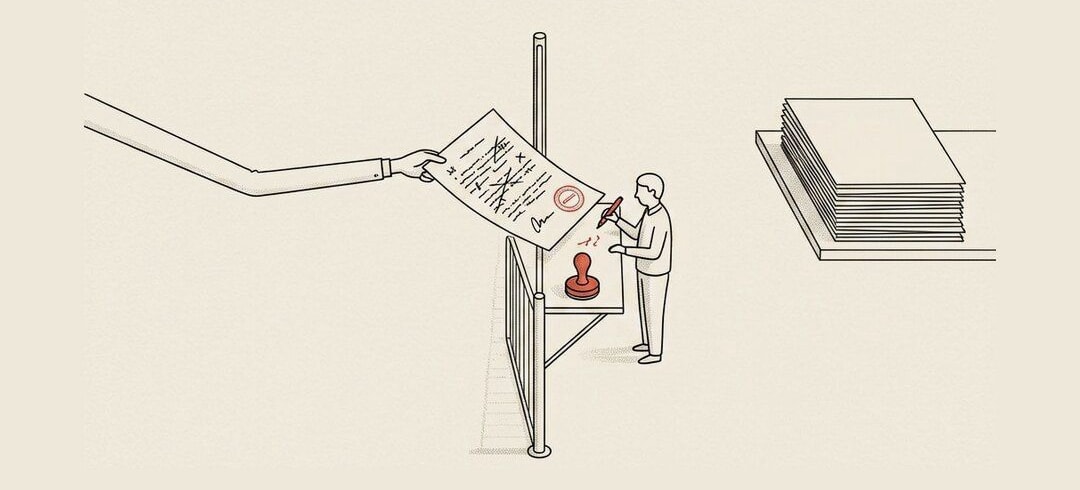
Pull Request
TLDR:A proposed change, put up for review.
You ever leave a comment in someone's Google Doc instead of just rewriting their paragraph? You highlight the line, suggest the edit, and wait for them to hit accept. You didn't touch the real document. You proposed a change and let them decide.
That's a pull request. Just for software.
Branches are those parallel universes where you build a risky idea off to the side without touching the working version. At some point that branch is done and you want it back in the real thing (the version almost always called "main"). You don't just shove it in. You raise your hand: "I built this on my branch. Here's exactly what I changed, line by line. Someone look it over before it goes live." That raised hand is the pull request. PR for short.
Why not just merge it straight in? Because "I changed something" and "I'm proposing a change, on the record, for review" are two completely different things, and the gap between them is the reason software doesn't constantly fall apart.
A PR is where the safety checks happen before anything reaches real users:
People read it. Teammates leave comments right on the lines they're worried about. "Why'd you delete this?" "This'll break checkout." You go back and forth until it's right.
Tests run on their own. The moment you open the PR, the project automatically runs its checks to make sure you didn't break anything. Green means go.
Nothing merges until someone says yes. The change sits in the waiting room, fully visible, until it's approved.
This is also how a total stranger improves a tool they don't own. They find a project on GitHub, copy it, fix the bug that's been annoying them, and open a PR back to the original. The person who runs the project reads it and, if it's good, merges it. That stranger never had a password or special access. The PR was the front door, and the review was the bouncer. I do this constantly now with tools I use. See something broken, fix it, send the PR.
A PR isn't bureaucracy. It's a paper trail. Months later, anyone can pull up that exact change and see what shifted, who signed off, and why. When an AI agent builds something for you, it can open one too, so you (or a teammate) get to glance at the work before it ever touches main.
Suggest the edit. Let someone hit accept. Then it's real.