define open-source --plain-english
Open Source
TLDR:Code anyone can read, use, and improve.
Most products are a sealed box. You get the meal, never the recipe. You can taste it, you can buy more of it, but you'll never know exactly what's in the sauce. The company guards that on purpose. It's the whole business.
Open source flips the box open.
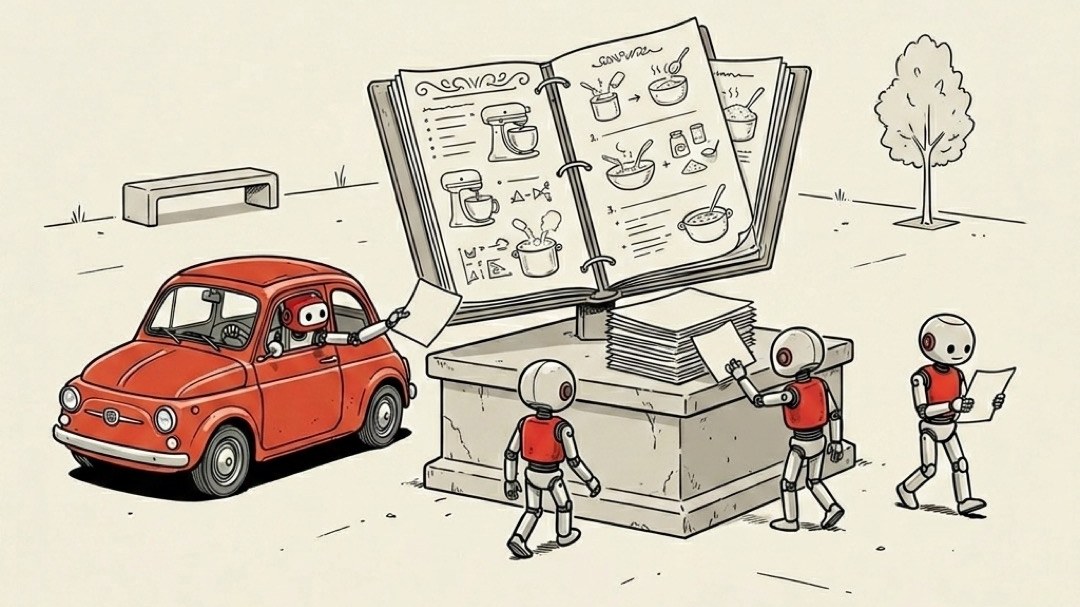
The full source code, the actual recipe the software is built from, is posted in public for anyone to read, use, change, and pass along. Usually for free. Nothing's hidden in the back. You can walk into the kitchen, read every line, and see precisely how the thing works.
Picture a recipe posted online instead of locked in a vault.
Thousands of cooks make it. One notices the step that never quite worked and fixes it. Another tweaks the seasoning. Someone translates it. Every improvement flows back into the same recipe, so the version you cook tomorrow is better than the one from last year, and you didn't lift a finger to make it so. That's open source software: strangers all over the world quietly improving the same thing, because they all use it and they all benefit.
You're standing on it right now and don't know it.
Open source isn't some niche corner for hobbyists. It's the floor the whole internet is built on.
- The software running most of the world's websites? Open source.
- The language a huge chunk of AI tools are written in (Python)? Open source.
- The thing tracking every version of your code (Git)? Open source.
Your favorite apps aren't built from scratch. They're stitched together from free, public pieces that millions of people have already tested, broken, and fixed. The team didn't reinvent the wheel. They grabbed a wheel someone gave away and bolted it on.
Why on earth would anyone give their work away?
Fair question. It feels backwards. But there are three real reasons, and they're not charity:
Trust. Anyone can inspect it. Nothing's hidden, so nothing sketchy can hide. With a sealed box, you're taking the company's word for what's inside. With open source, you can just look.
Speed. The whole world helps build it. A company of 50 can't out-fix a global crowd of thousands poking at the same code for free.
Reach. When something's open and good, it spreads. It becomes the default everyone reaches for, which makes it even better, which makes it spread more. Give it away and it can become the standard.
My own turn with this. I barely touched open source until this year. Now I've done a ton. I've always been the "if I see something broken, I fix it" type, and open source is what lets you hand that fix to everyone instead of just patching it for yourself. When I hit a bug in a tool I use, like OpenClaw, I don't file a complaint and wait. I open the code, fix it, and send the change back. That "send it back" move is a pull request, and it's the whole loop: you found the broken step in the recipe, so you fixed the recipe for the next person too.
The best part: you get to stand on decades of free, battle-tested work instead of building everything from nothing. Someone already solved the boring hard parts and left the answer out in the open. You just have to pick it up.
The box is open. If you make it better, hand it back.