define type-type-error --plain-english
Type / Type Error
TLDR:Half the time your build dies, it's not some deep bug.
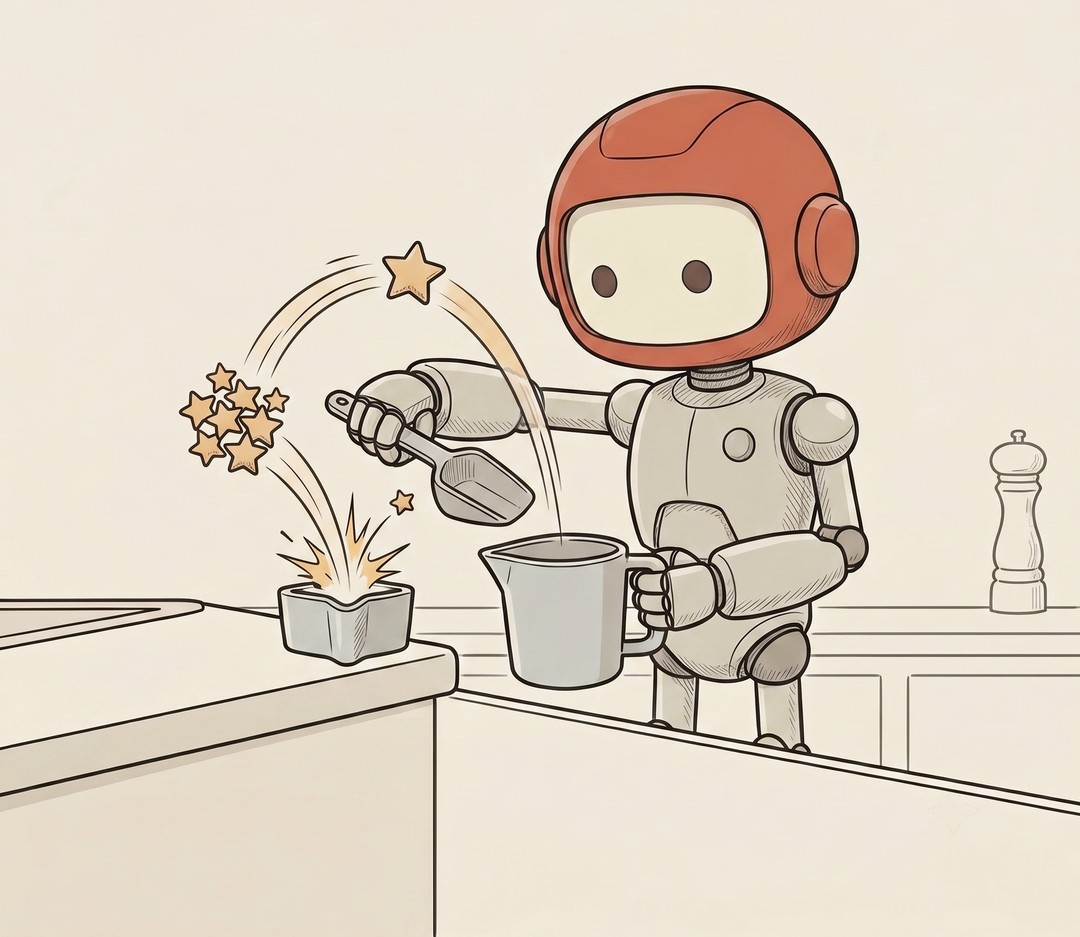
Half the time your build dies, it's not some deep bug. It's the code equivalent of pouring salt into the cup marked "flour."
Every piece of data in code has a type, a label saying what kind of thing it is. Text is one type (coders call it a "string"). A whole number is another. A list is another. True-or-false is another. That label isn't decoration. It decides what you're even allowed to do with the thing.
Labeled measuring cups. Picture your counter lined with cups labeled flour, salt, eggs. The labels exist so you don't dump salt where flour goes and wreck the batch. Types are those labels, for data. The slot marked "number of items" expects an actual number. Try to pour the word "twelve" (text) into it instead of 12 (a number), and the kitchen stops you cold. Wrong ingredient for that cup.
A type error is the computer catching exactly that mismatch and refusing to continue: "you handed me text where I needed a number." The classics:
- Trying to do math on a phone number that's secretly stored as text (
"555-1234" + 1is nonsense). - Asking for the third item in something that isn't a list.
- Handing a function a date when it was waiting for a name.
This is the wall vibe-coders smack into most. Your AI writes a pile of code, you run it full of hope, and instead of working it spits something like TypeError: expected string, got undefined. It feels like a crash and a personal failure. It's the opposite. It's the kitchen catching a mismatched ingredient before it bakes into the finished dish and reaches a customer.
A lot of these get caught before the thing ever runs, the instant you build it. Some languages check every label up front. That's exactly what people mean by a "typed" language like TypeScript, where the name is literally about types. Catching a mismatch at build time means catching it on your own machine, in private, instead of live in front of someone.
When you hit one, don't squint at the code guessing. Paste the whole error into your AI. That wall of text is a stack trace, and it names the exact spot the wrong ingredient went into the wrong cup. Nine times out of ten the fix is one line: convert the text to a number, check the thing actually exists first, or hand over the right kind of value.
A type error isn't your project breaking. It's the labels working, catching salt in the flour cup before it ever hits the oven.