define stack-trace --plain-english
Stack Trace
TLDR:When your code crashes, it doesn't just die quietly.
When your code crashes, it doesn't just die quietly. It leaves a confession, a wall of text most people scroll past in a panic. That wall is the single most useful thing you can hand your AI.
When a program hits something it can't handle, it stops and prints a stack trace, the trail of exactly where it was, step by step, at the instant it blew up. It looks like intimidating gibberish. It's actually a confession, written in order.
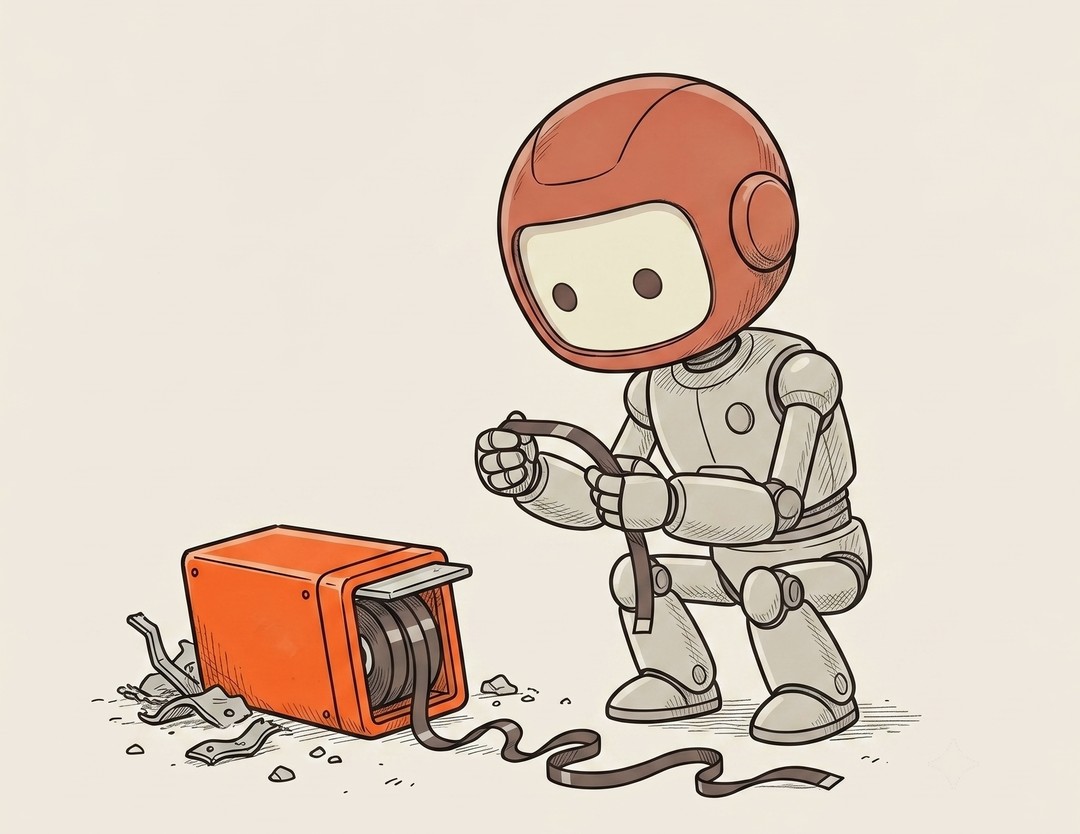
The black-box flight recorder. When a plane goes down, investigators don't stand around guessing. They pull the black box, which recorded every instrument right up to the final second, and read it backward to the exact moment things went wrong. A stack trace is the black box for your crash. It captured the chain of steps the program was running (I was doing this, which I'd started because of that, which started because of this), and the very top line is usually the moment of impact.
How to actually read one. You read it like a story, mostly in reverse. A program calls one thing, which calls another, which calls another, steps stacked on top of each other. When the deepest step fails, the trace prints the whole stack. The top line is almost always the exact spot that broke, and it usually names the file and even the line number. The lines below it are the trail showing how the program got there. You do not need to understand every line. You need the top one. That's where it actually went wrong.
The distinction that matters, because this sounds like the other kind of trace and isn't. Distributed tracing follows one request as it hops across many different services, like a tracking number moving through a dozen warehouses. A stack trace is the opposite zoom: the blow-by-blow inside one program at the single instant it crashed. The flight recorder of one plane, not the route map of the whole airline. One follows a request across the system. One dissects a single crash in place. Same word "trace," completely different tool.
Why this might be the most practical entry for you. You are going to paste these into AI constantly, and the move that separates people who get unstuck in minutes from people who flail for an hour is this: paste the whole trace, not "it broke." The full trace hands the AI the exact file, the exact line, and the exact mismatch, often a type error. "It's not working" forces the AI to guess, and guessing is where hallucination lives. The stack trace lets it diagnose. You're handing over the black box instead of describing the crash from memory.
A stack trace is the black box, not a brick wall. Read the top line for the point of impact, and paste the whole thing into your AI. Never just "it broke."