define log --plain-english
Log
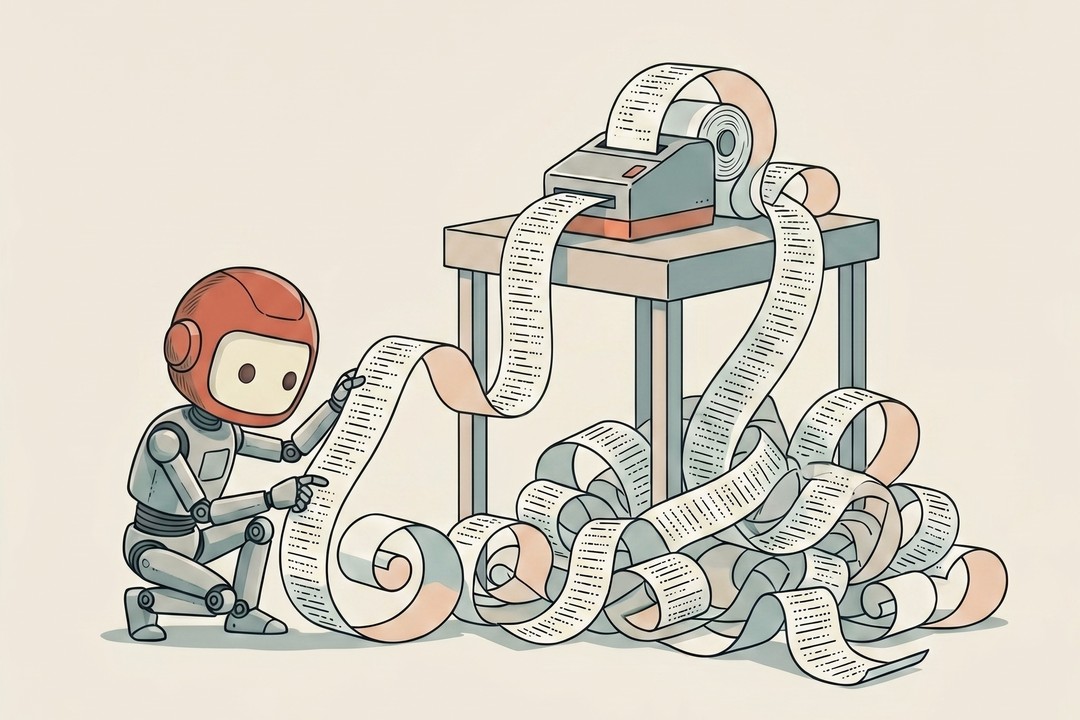
TLDR:Picture a receipt printer that never stops.
Software prints a receipt tape it can't lie on, because it stamps each line the instant something happens and never goes back to edit it. That tape is the log.
Picture a receipt printer that never stops. It spools one long tape onto the floor, and every time anything happens it prints a line stamped with the exact moment. It doesn't summarize, it doesn't tidy up, it doesn't decide what mattered. It just records, in order, as it goes: request came in, payment charged, error right here, finished. One event, one line, forever.
That's a log. The running, timestamped, append-only record of what a program actually did. "Append-only" is the important part: new lines only ever get added to the bottom, and nothing already written gets changed. That's what makes a log an unedited witness, a tape written live rather than a story told afterward from memory. When something breaks, the live record is the thing you trust, because it can't have been quietly cleaned up.
How you actually use it. When something goes wrong, you don't sit there guessing. You scroll back along the tape to the moment it happened and read what the software was doing right then. Half of debugging is just this: find the moment in the log, read the line before everything went sideways.
A couple of connections so it locks in:
- The trace was one order's whole journey across stations. A log is one station's full tape. You start at the log to see "what happened here," and reach for a trace when you need to follow "where did this one request go." Different zoom, same goal.
- When a program crashes and prints its confession, that confession usually lands in the log. The stack trace and the log aren't rivals. The log is where the breadcrumbs pile up.
Why this matters the second an agent is involved. Agents run with no screen and nobody watching, which is what running headless actually means. So the log is how you see what an agent did while you were asleep. "Check the logs" just means read the tape of every step it took, in order. When an agent goes sideways at 2am, the log is the receipt that tells you exactly where.
One honest note: a log is only as useful as what got written to it. Too little and it's silent about the one thing you needed. Too much and the line that matters is buried under noise. Good logging is recording just enough to rebuild what happened, and no more.
A log is the receipt tape software prints as it works, one timestamped line at a time, never edited. When something breaks, you don't guess. You scroll back and read what actually happened.