define deploy --plain-english
Deploy
TLDR:Push your work live for the world to use.
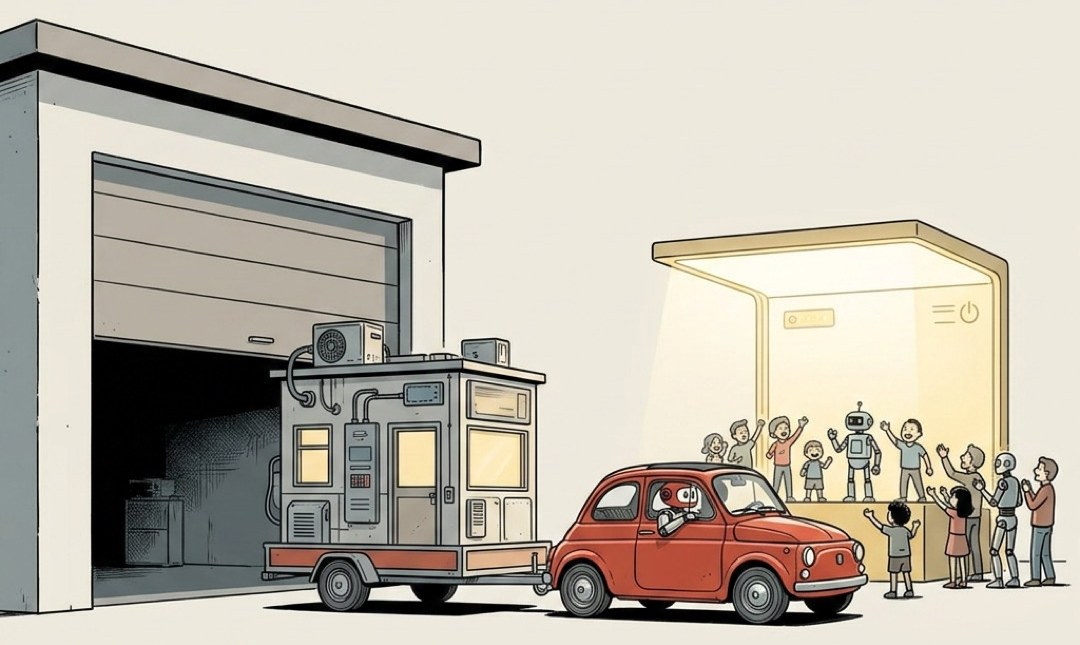
Everything you've built so far has lived in an empty theater. Full lights, full costumes, the whole show running, and not one person in a seat. Deploy is the house doors swinging open. The audience walks in. The thing you've been rehearsing alone is suddenly real, on a real stage, with real people watching.
For years I thought this step was some massive production. Servers to configure, machines to babysit, a checklist a mile long. So I never shipped anything. The rehearsal just ran forever in the empty room.
Your project has been running on your own machine, at that private address only you can reach. Deploying is the move that copies it onto a real server with a real web address and flips it on for the world. You go from "it runs on my laptop" to "anyone with the link can use it."
And the part nobody warns you about: it's usually tiny. Not a production. One line, or one button.
vercel deploy
You type that, you wait a minute or two, and a real web address comes back. Your thing is live. "Deploy" just means make this public and reachable.
It's a word you'll hear constantly, and now it'll mean something every time:
- "Did you deploy yet?" → "Is the new version actually live, or still just on your machine?"
- "We're deploying Friday." → "The new stuff goes public Friday."
- "That's not deployed yet." → "I built it, but nobody can reach it but me."
So when someone fixes a bug and you still see the old broken version, that's the gap. The fix exists. It just hasn't been deployed. It's a finished scene that never made it to opening night.
Now the scary part, said plainly. The second you deploy, real people hit it. A mistake isn't private anymore. The typo, the broken button, the page that falls apart on a phone, all of it is on stage in front of the audience.
This is exactly why version control is the safety net under the whole thing. If opening night flops, you don't panic and start rebuilding live while people watch. You roll back to the last version that worked, the last good save point, and the audience barely notices the curtain twitched. The bad version vanishes. The good one is back up in minutes.
That's the rhythm once you trust it:
Build and break it in private, on your own machine, where nobody sees you fumble.
Deploy when it's good enough to face an audience.
Roll back the instant something's wrong, then fix it in private and deploy again.
The whole reason I ship now and didn't before isn't that I got braver. It's that I stopped believing deploy was a big deal. It's one command, the audience walks in, and if the show's a mess you close the curtain and try again. Nobody remembers the flop. They remember the version that worked.
Build it private. Deploy to go live. Roll back if opening night flops.