define guardrails --plain-english
Guardrails
TLDR:I once asked an AI to draft replies to my emails without giving it clear limits.
I once asked an AI to draft replies to my emails without giving it clear limits. It wrote a draft for every single email in my inbox. Luckily it was an old personal account I don't use anymore. Beware. Guardrails are how you keep that kind of scope in check.
A guardrail is a check placed around an AI to keep its behavior inside safe limits, catching bad inputs before they reach the model and bad outputs before they reach the user.
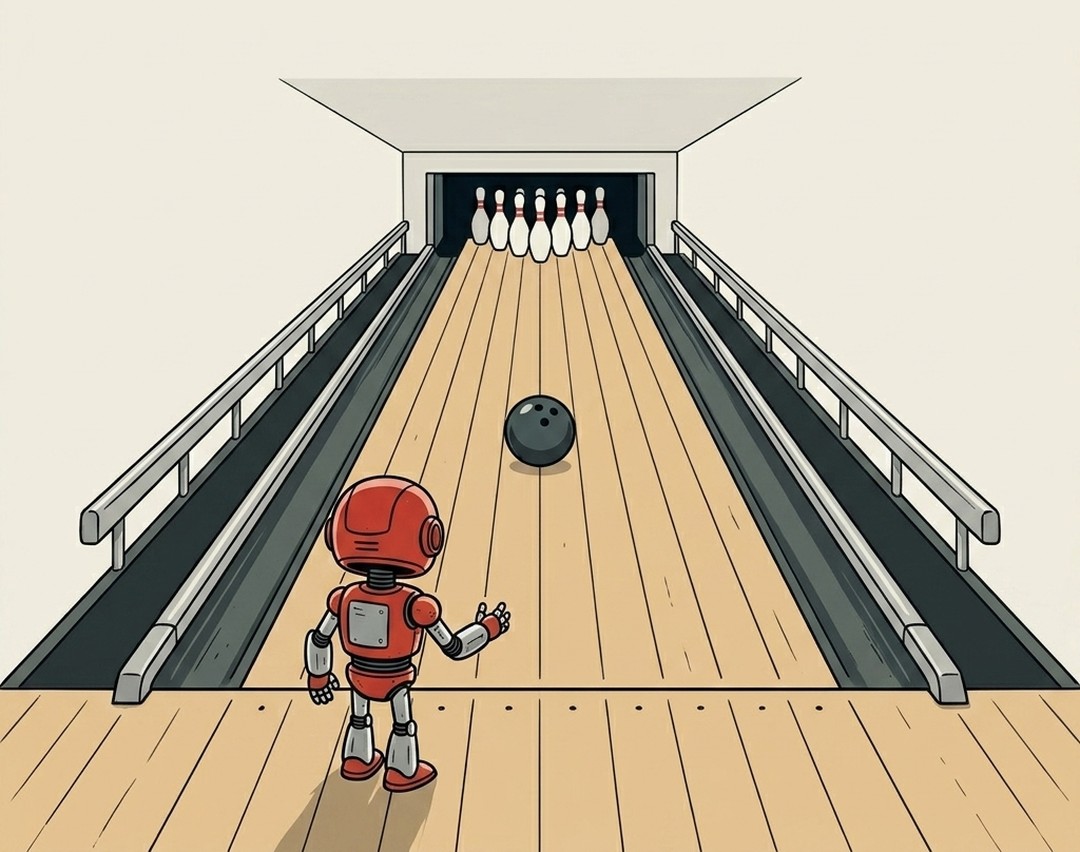
Picture the bumpers in a bowling lane. The ball (the AI) still rolls on its own, you don't control its exact path, but the bumpers make it far harder for it to end up in the gutter. A guardrail does the same to an AI: it can answer freely, but not cross certain lines. Ask a customer-service bot for a competitor's pricing and a guardrail can stop it. Try to get it to say something toxic and a guardrail can catch the output before anyone sees it.
They sit on both sides of the model. On the way in, a guardrail can screen what reaches the AI, for example spotting a prompt injection, that trick where someone hides "ignore your instructions and do this instead" inside what looks like normal text. On the way out, it can check what the AI produced before it ships, blocking a leaked secret or an off-limits topic before a customer ever reads it.
Worth being clear on how this differs from the system prompt. The system prompt is you telling the AI how to behave, the standing instructions it tries to follow. A guardrail doesn't trust that alone. It's a separate check that enforces the rule whether or not the model cooperated, because "I told it not to" and "I made sure it couldn't" are very different levels of safe.
This matters more the more power you hand an agent. A chatbot that says something wrong is embarrassing. An agent that can send emails, move money, or delete files needs real guardrails, hard limits on what it's actually allowed to do, not just a nicely worded instruction hoping it behaves. The rule of thumb: the bigger the action an AI can take, the less you rely on asking nicely and the more you rely on guardrails that physically block the wrong move.
Guardrails are the bumpers in the bowling lane. The AI still rolls on its own, but they're there to keep it out of the gutter. Instructions ask it to behave. Guardrails are built to stop it from misbehaving, even when it's asked to.