define agents-sdk --plain-english
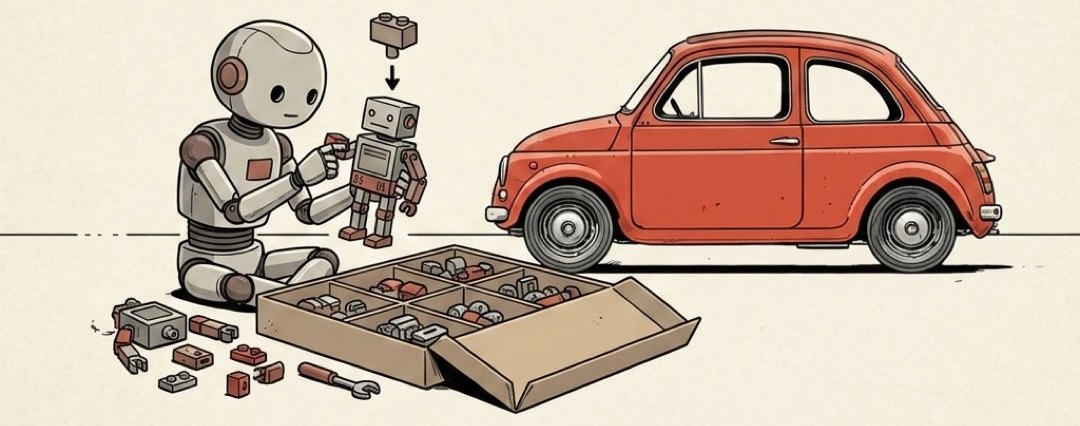
Agents SDK
TLDR:A starter kit for building your own AI worker.
The first time I tried to build an agent from scratch, I spent two days on plumbing and zero minutes on the actual idea. Wiring up the loop, hooking in the tools, keeping track of what it had already done. None of it was the fun part. All of it had to exist before the fun part could happen.
An Agents SDK is what hands you all that plumbing, pre-built, so you skip straight to the idea.
Pull two pieces back into the room first, because this word is just those two stapled together:
- An SDK is the IKEA box. Pre-cut parts, a little bag of screws, a booklet. You assemble instead of milling raw lumber.
- An agent is AI that doesn't just answer, it acts. You give it a goal and it works in a loop: take a step, look at what happened, decide the next step, repeat, until the job's done.
So an Agents SDK is the IKEA box built for exactly one piece of furniture: a working agent.
What's actually in the box. Building an agent by hand means hand-wiring four annoying things. The kit hands you all four, done:
The loop. The engine that lets it keep going. Step, check, step again, instead of one reply and a full stop. This is the part that makes it a worker and not a chatbot.
The tool wiring. The hookups that let it reach the real world. Order off an app's drive-thru window, run a command, read and write a file, send the email.
The memory. A spot to hold what it's already learned this run, so step four still knows what step one turned up.
The guardrails. The fences. Never spend over this amount. Always ask before deleting. Stay on this task. The rails that keep a fast, confident worker from confidently driving off a cliff.
Wire all four yourself and you've burned days before your agent does a single useful thing. Open the box and they're already snapped together. Your time goes where it should: on what the agent is for.
Think of a kit car. The engine, the frame, the wheels, the transmission all arrive ready. You are not machining a crankshaft in your garage. You're bolting proven parts together and customizing the bits that make it yours. The hard, dangerous engineering is solved. The personality is your job.
The kit gives you a car that runs. You decide where it drives.
Why this is the quiet engine behind every "custom AI agent" you keep hearing about. A support agent that reads your help docs and answers tickets. A research agent that digs through a pile of links and writes you a brief. An ops agent that pulls yesterday's numbers and drops them in Slack every morning. None of those teams built the loop, the memory, or the guardrails from scratch. They opened a kit, described the job, and plugged in their own tools.
One honest line, because "starter kit" can sound like "press go and walk away": the kit hands you a working frame, not a finished, trustworthy worker. The loop and the rails are given to you. Tightening the rails for your actual job, deciding what it's allowed to touch, watching it the first dozen runs, that's still on you. A kit car still needs someone who knows how to drive it.
The kit handles the machinery. You bring the mission.