define rest-api --plain-english
REST API
TLDR:The common rulebook most APIs follow.
The first time I plugged my AI into a service I'd never touched before, I braced for a whole new learning curve. There wasn't one. It behaved almost exactly like the last service I'd wired up. Same shape, same moves, different logo. That's not luck. That's REST.
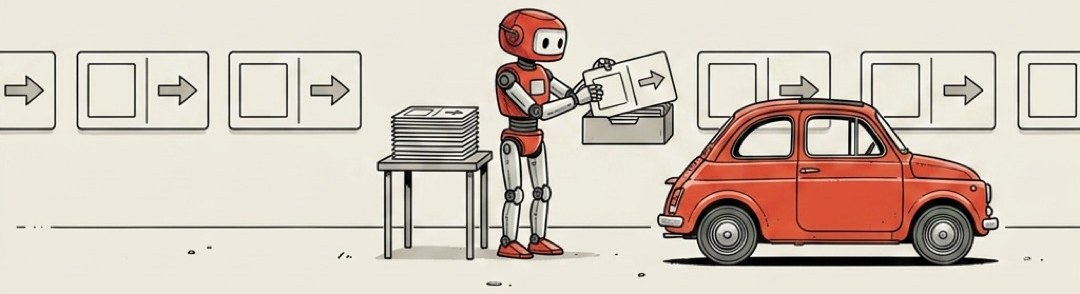
An API is the drive-thru window: the place your AI walks up to and orders things off a menu. The problem is, if every restaurant built its window a different way (different height, different language, different way to point at the fries), you'd have to relearn ordering at every single one. Exhausting. REST is the agreement that says: build your window roughly the same way everyone else does, so nobody has to relearn.
The whole idea rests on two simple parts.
Everything is a "thing" sitting at an address. Your orders live at
/orders. Your customers live at/customers. A product lives at/products. Each one is a noun with its own spot, like aisles in a grocery store. You don't go "find me data." You go to the aisle.You act on those things with a tiny, fixed set of verbs. Not a hundred custom commands. Just the handful you already use on anything you own:
- get it (read what's there)
- create a new one
- update one that exists
- delete one
Put those together and the system reads almost like English. Go to the /orders aisle, get what's there. Go to the /products aisle, create a new one. That predictability is the entire point.
Think of it like the rules of the road. Red means stop, green means go, the steering wheel is round, it's on the same side of the car all week. You don't relearn how to drive when you land in a new city. You just drive. REST gives APIs that same shared etiquette, so the muscle memory carries over.
This is why a developer (or your AI) can pick up a brand-new service in an afternoon and not break a sweat. If it's a RESTful API, and most are, they already know roughly how it behaves before they've read a single page of its docs.
Where you'll actually bump into the word. Someone will say "they have a REST API" or "it's RESTful." All they're telling you is:
- This thing follows the normal, predictable rules.
- Your tools will probably just work with it.
- Nobody has to invent a special handshake to talk to it.
It's a quiet little promise of "no surprises here." That's it.
You don't need to build one, and you definitely don't need to memorize the rulebook. When you hear RESTful, hear "behaves the way you'd expect." When you hear someone gripe that an API "isn't RESTful," hear "ugh, this one's a weird snowflake and I have to learn its quirks." Both tell you exactly how annoyed to be before you even start.
REST is the rulebook that makes every drive-thru window behave the same way, so nobody has to relearn how to order.
Those verbs have a name: HTTP methods.