define ci-cd --plain-english
CI/CD
TLDR:Imagine every time you finished a change, a robot automatically grabbed it, ran every test, built the app, and shipped it, all without you touching a thing.
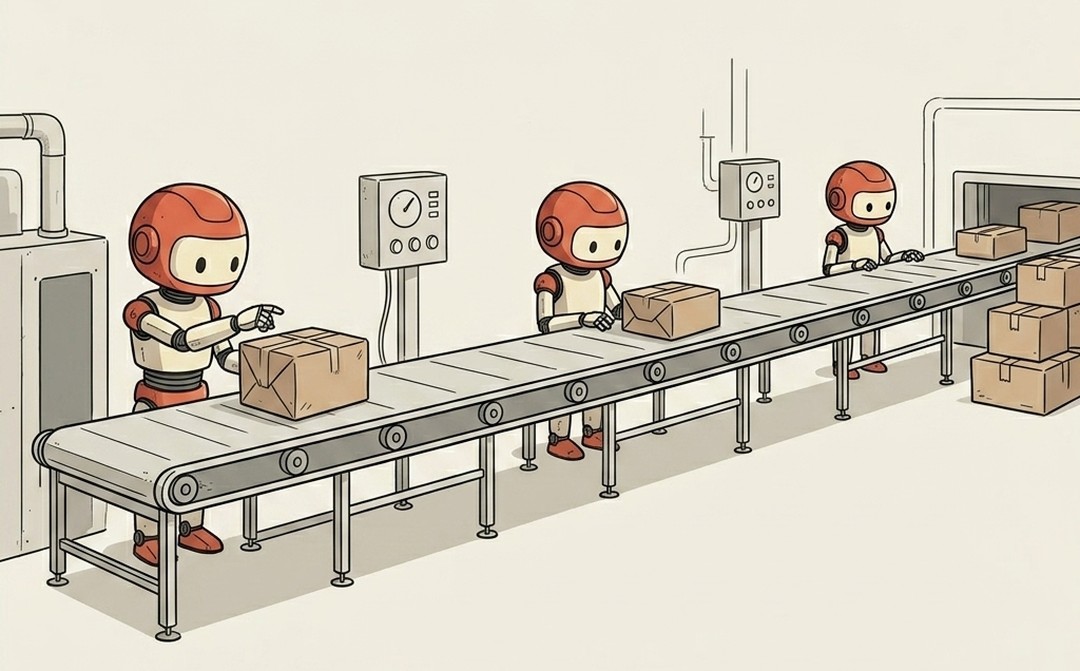
Imagine every time you finished a change, a robot automatically grabbed it, ran every test, built the app, and shipped it, all without you touching a thing. That robot assembly line is CI/CD.
CI/CD stands for continuous integration and continuous delivery (or deployment, and those last two aren't quite the same thing, more in a second). Behind the jargon it's one simple idea: automate the whole path from "I changed some code" to "it's live and working," so a human doesn't have to babysit each step. It's the conveyor belt that takes your work from your hands to your users.
Split the two halves, because each solves a real headache.
- CI, continuous integration, is the front of the line. Every time someone's change comes in, it's automatically combined with everyone else's work and all the tests are run. The point is to catch breakage immediately, the moment it's introduced, instead of discovering a tangled mess weeks later. It's the quality-control station: nothing moves down the belt until the checks pass.
- CD is the back of the line, and here the two D's split. Continuous delivery means every change that passes its checks is automatically built and made ready to ship, with a person often giving the final go to send it live. Continuous deployment goes one step further: it pushes every passing change all the way to real users automatically, no hand on the button. Either way, nobody is manually copying files to a server at midnight.
The factory line is the picture to hold. Raw work goes in one end (a code change) and moves through stations automatically: combine it, run the tests, build it, ship it (or get it ready to ship). If any station fails, a test breaks or the build won't compile, the belt stops and everyone's told exactly where. If every station passes, the finished product rolls out the other end with no one hand-carrying it.
Why this is one of the biggest quiet multipliers in modern software: it makes shipping boring, in the best way. Without CI/CD, releasing is a tense manual ritual, run the tests by hand (or skip them and pray), build it, copy it to the server, hope. So teams ship rarely and nervously. With CI/CD, shipping is just "merge the change and let the line run," so teams ship many times a day, calmly, because the robot checks everything the same way every time. It leans on nearly every idea in this dictionary: it runs your tests, does the build, handles the deploy, can push to staging first, and if something slips through, you still have a rollback.
So "it's in the pipeline" or "CI is green" decoded: the automated line ran its checks on this change and they passed. (Green means the machine is happy. There may still be a human review or a final approval before it actually goes live.) CI/CD is the machine that lets a team move fast without breaking things, because the checking never gets skipped and never gets tired.
A merge folds work together; CI/CD is the robot line that takes it from there. It combines, tests, builds, and ships automatically, so releasing software becomes calm and routine instead of a white-knuckle event.